The best AirTag glasses case in 2026 is the GATYZGEAR hard-shell case, which has a built-in AirTag compartment so there's no DIY required. For everyone else, a standard hard-shell case plus a $6 silicone holder tucked in the corner works just as well. Three methods cover every case type: inside the case, adhesive mount on the exterior, or an AirTag loop through a zipper pull. Pick the one that fits your case.
Prescription glasses can cost $200 to $800, and most people misplace them several times a week — almost always somewhere in the house. An AirTag attached to a glasses case won't prevent that, but it does mean you're done searching in 30 seconds instead of 20 minutes. This guide covers the purpose-built cases worth buying in 2026, the three DIY methods that work on cases you already own, and the one alternative worth knowing about if you want to track the frames directly.
- The GATYZGEAR hard-shell case ($18–$25) is the only purpose-built AirTag glasses case with a dedicated corner compartment — no DIY required.
- For any standard hard-shell clamshell, a $6 silicone coin holder tucked in the corner works just as well at a fraction of the price.
- Metal-lined cases block Bluetooth; for those, always mount the AirTag on the exterior (Method 2) rather than inside.
- AirTag is IP67 water-resistant and lasts about one year on a single CR2032 battery — it outlasts most cases it's paired with.
- AirTag tracks the case, not the frames. If you frequently set glasses down without the case, a frame-mount option like the Nomad Glasses Strap or Orbit x Glasses solves a different problem.
The Best Purpose-Built AirTag Glasses Cases Right Now
There are only a handful of glasses cases with a dedicated AirTag slot. Most "AirTag-compatible" listings on Amazon are just standard cases with a lanyard attached, not the same thing. Here are the ones that actually do the job.
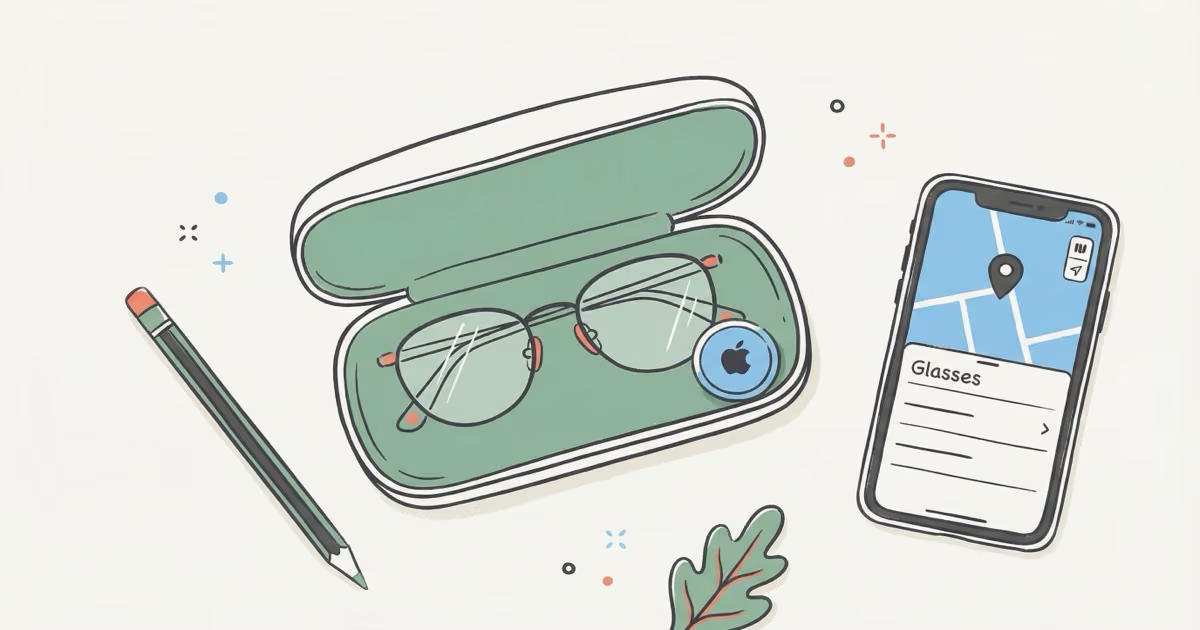
GATYZGEAR Hard-Shell Case: Best Overall
The GATYZGEAR hard-shell glasses case ($18–$25) is the only case that actually qualifies as purpose-built. There's a discreet corner compartment sized exactly for an AirTag: no silicone holder, no foam, no rattling. The hard EVA shell protects your lenses, the interior is velvet-lined, and the zipper keeps everything closed during travel. It's slightly larger than a standard drugstore case, which actually helps if you have oversized frames.
The one limitation: it fits standard to slightly large frames well, but slim wire-frame glasses may rattle around a bit unless you use the included cloth. At $18–$25, it's the simplest AirTag glasses case solution available right now.
GATYZGEAR Eyeglass Lanyard: Best for People Who Skip the Case
Plenty of people set their glasses on a table without ever putting them in a case. For those people, a case-based tracker is useless. The GATYZGEAR eyeglass lanyard with AirTag holder ($15–$20) clips to your frames like a standard sports strap, with a small AirTag capsule at the back of the head. The AirTag stays with the glasses wherever they go, case or no case.
It's adjustable and works with most frame shapes. The AirTag capsule adds a little bulk at the nape of the neck, which bothers some people and not others. Worth knowing before you order.
Nomad Glasses Strap: Most Polished Frame-Mount Option
The Nomad Glasses Strap ($29.95) takes a different approach. It's a braided nylon sports strap that attaches to your frames, with a TPU AirTag capsule acting as the tensioner at the back. The AirTag stays on your glasses at all times, not in the case. Macworld's review called it the best glasses strap currently feasible to hold an AirTag, with the caveat that the AirTag's size is a bit ungainly in proportion to the cord. Nomad has done everything possible to minimize the bulk, but it's still visible.
My take: the Nomad makes sense if you frequently leave your glasses sitting on surfaces without the case. If you're disciplined about using a case, stick with the GATYZGEAR and skip the strap entirely.
KOAL TECH Eyewear Tracker Mount: Lightest Option for Frame-Mounting
The KOAL TECH Eyewear Tracker Mount clips directly to the temple arm of your glasses and holds an AirTag flush against the frame. It's lighter and lower-profile than the Nomad capsule. KOAL TECH says every product is personally tested before launch, which is a reasonable claim for a small brand, and the reviews back it up. The tradeoff: it's not compatible with all frame widths, so check your temple arm dimensions before ordering.
Satechi FindAll Glasses Case: Worth Mentioning, but Not AirTag-Based
The Satechi FindAll Glasses Case ($49.99) has Apple Find My built in, but it's not a case for an AirTag. The tracker is integrated into the case itself. The battery lasts up to eight months and charges wirelessly on any Qi pad, which is a real advantage over AirTag's annual CR2032 swap. It comes in vegan leather, looks more premium than the GATYZGEAR, and gets solid reviews from Techlicious and Yanko Design. The catch: $50 is steep, and if the built-in tracker fails out of warranty, the whole case is worthless. AirTag is user-replaceable. This isn't.
If you want to avoid buying an AirTag separately, the Satechi is a reasonable pick. Otherwise, the GATYZGEAR plus an AirTag 2 ($29) costs roughly the same and gives you more flexibility.
3 DIY Methods for Cases You Already Own
Most people don't need to buy a new glasses case. If you have a standard hard-shell clamshell, one of these three methods works fine, and costs $5–$15 rather than $25+.
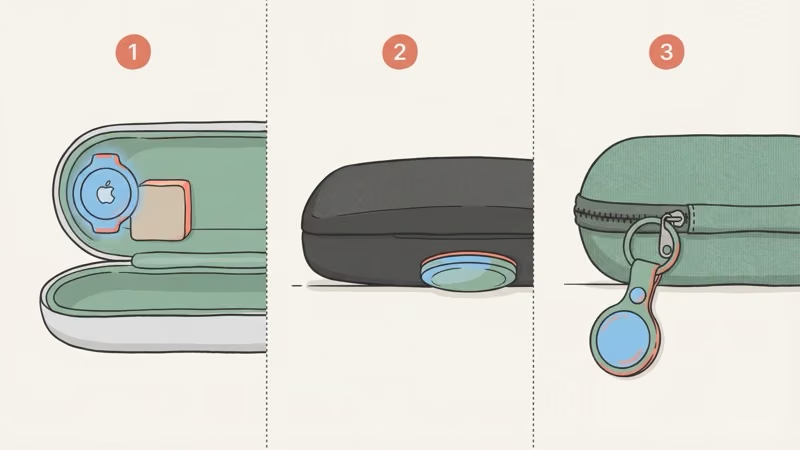
Method 1: Inside the Case (Most Discreet)
A thin silicone coin-holder holds the AirTag and keeps it from moving. Tuck it into one of the back corners of a standard hard-shell clamshell. There's almost always 10–15mm of dead space there. A small square of foam stops any rattling. The AirTag is completely hidden, protected from drops, and doesn't add bulk to the case's outside profile.
This only works with hard-shell cases with at least 38mm of interior depth. Slim cases and fabric sleeves don't have the room. Check your case before ordering the holder.
- Best for: Standard clamshell cases, oversized travel cases.
- Battery access: You have to open the case to replace the CR2032, which takes 30 seconds. Our AirTag battery replacement guide has photos if it's your first time.
Method 2: Adhesive Mount on the Exterior
3M-backed AirTag holders peel and stick to the flat base of any hard case. Five minutes, no tools. Battery access is easy since the AirTag is right there on the outside. The downsides: it's visible to anyone looking at your case, and it adds about 8mm of thickness to the outside. Some high-end adhesive mounts from brands like Elevation Lab hold very securely; cheap ones can peel off in heat.
- Best for: Any case with a smooth hard exterior, including cases where the interior is already tight.
- Watch out for: Metal-lined cases. A metal shell acts like a partial Faraday cage and weakens the AirTag's Bluetooth signal. For metal cases, exterior mounting is actually the right call, since the AirTag stays outside the metal.
Method 3: AirTag Loop Through a Zipper Pull (Most Versatile)
Thread an Apple AirTag Loop or a third-party keyring holder through the zipper pull on a soft case. No adhesives, no interior space used, and you can move the AirTag to a different bag in 10 seconds. The AirTag hangs outside the case and is visible, but it's secure and swappable.
- Best for: Soft zippered cases, cases with belt loops, people who share an AirTag between multiple bags.
- Apple AirTag Loop: $29 at Apple, or grab a third-party silicone keyring case for $8–$12. The Apple version is better-looking; the third-party version is functionally identical.
Does an AirTag Actually Fit Inside a Glasses Case?
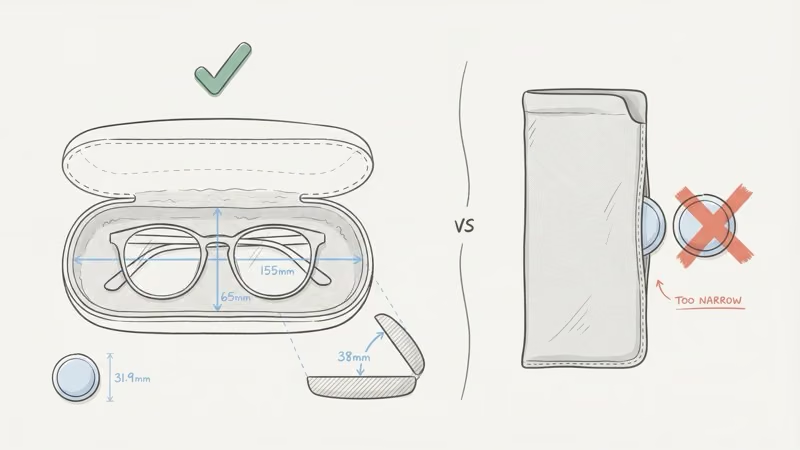
Yes, in most standard hard-shell clamshells. The AirTag 2 is 31.9mm in diameter and 8mm thick. A typical clamshell interior runs about 155mm × 65mm × 38mm, which leaves enough corner space to tuck an AirTag away without touching the lenses.
It will not fit in ultra-thin fabric sleeves, compact wire-frame cases, or cases that already fit the glasses snugly. For those, Method 2 or Method 3 are your options. See our best AirTag holders and accessories guide for more compatible cases across different item types.
| Case type | AirTag fits inside? | Best method |
|---|---|---|
| Standard hard-shell clamshell | Yes (corner) | Method 1 or 2 |
| Oversized / travel hard case | Yes (plenty of room) | Method 1 |
| Soft zippered case | No (too thin) | Method 3 |
| Thin fabric sleeve | No | Method 2 (adhesive exterior) |
| Metal-lined case | Yes, but signal is reduced | Method 2 (exterior for best signal) |
What if You Want to Track the Frames, Not the Case?
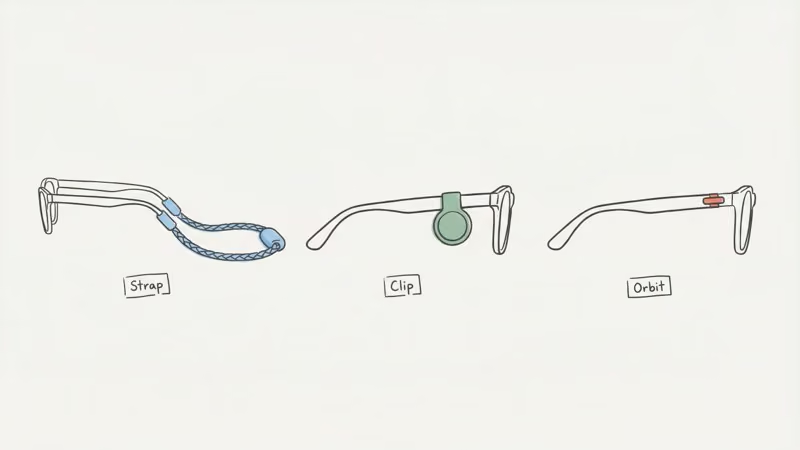
Case-based tracking has one real weakness: if you set your glasses down without the case, the AirTag doesn't go with them. Two products solve this differently.
The lanyards above (GATYZGEAR and Nomad) keep the AirTag on your glasses at all times. They work on Apple's Find My network, same as AirTag. They're the practical choice for most people who want frame-level tracking.
The Orbit x Glasses is a different category entirely. It's the only dedicated frame-mounted Find My tracker that mounts directly to the temple arm of your frames, barely visible at 28mm × 5mm. No strap, no lanyard. It's rechargeable (no battery to replace) and lasts 2–3 weeks per charge. The catch: it's only compatible with frames that have at least 4mm of temple arm height, which rules out some slim wire-frames. Worth checking before ordering. If you want a full side-by-side on accuracy and range, our AirTag accuracy guide covers what the Find My network actually delivers in real conditions.
How to Set Up an AirTag for Your Glasses Case
Takes under a minute. You need an iPhone running iOS 14.5 or later with Bluetooth on. Apple's AirTag setup guide covers the full pairing process if anything doesn't go as expected.
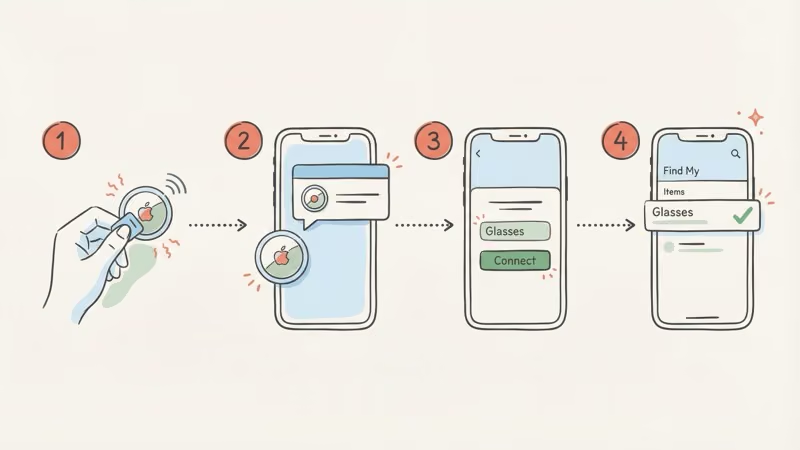
- Pull the plastic tab from the AirTag. It'll play a short chime when the battery activates.
- Hold it near your unlocked iPhone. A setup card appears automatically.
- Tap Connect, then name it "Glasses" or "Sunglasses."
- Tap Continue to register it to your Apple ID. Done.
Your AirTag now shows up in the Items tab of Find My. Within Bluetooth range (roughly 10 meters indoors), you can ping it for an audible sound or use Precision Finding for a directional arrow. The AirTag 2 extended Precision Finding range by 1.5x compared to the original, which helps in larger rooms. Further away, Find My shows the last known location and updates whenever another Apple device passes your glasses. If you're curious how reliable those updates actually are, the AirTag 2 review covers real-world network performance in detail.
One thing worth knowing upfront: AirTag is not a real-time GPS tracker. It works brilliantly for finding glasses left at home, in the office, or at a restaurant. I've used one on my own glasses case for six months and the audible ping has saved me a real search at least a dozen times. It won't help if your glasses are stolen. Read our best uses for AirTag guide if you want a clearer picture of where it shines and where it doesn't.
Practical Tips to Keep Tracking Reliable
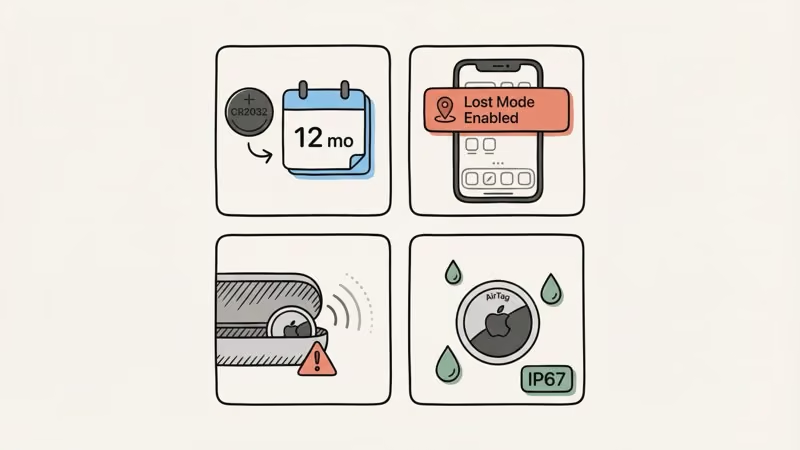
A few habits that actually matter:
- Replace the battery once a year. The CR2032 lasts about 12 months. Your iPhone sends a low-battery alert, but setting a calendar reminder for next March is simpler.
- Enable Lost Mode immediately if glasses go missing. Open Find My, select your AirTag, tap "Enable Lost Mode." You'll get a notification the moment any Apple device detects it.
- Avoid metal-lined cases if using Method 1. Metal partially blocks Bluetooth. If you have a metal case, use Method 2 (adhesive on the exterior) for better signal.
- Don't worry about moisture. AirTag is IP67 water-resistant. Your case will likely fail before the AirTag does.
- Consider engraving your AirTag. If it's ever found by someone, a name or phone number on the back helps. Apple offers free laser engraving at checkout. See AirTag engraving ideas for what works well.
AirTag vs. Other Glasses Trackers
The main alternative is a glasses-specific Bluetooth tracker rather than AirTag in a case. Tile works on a different network. Only devices with the Tile app installed and active can relay location. In dense urban areas, Tile's network is workable. In suburbs or rural areas, the Find My network is meaningfully better because it includes every iPhone in range, not just Tile users. For iPhone owners, AirTag wins on network size by a wide margin. Engadget's 2026 Bluetooth tracker roundup ranks AirTag as the top pick for iPhone users for exactly this reason.
There's also the AirTag alternatives worth knowing. Chipolo Pop, for instance, works on both Find My and Google Find Hub, which matters if multiple people in your household use different phones. If everyone's on iPhone, stick with AirTag.
The Bottom Line
Buy the GATYZGEAR case if you want zero DIY. It's the only case where you drop the AirTag in and close the lid. If you already have a case you like, a silicone coin holder from Amazon for $6 and Method 1 gets you to the same result for a fraction of the price. The Nomad Strap and GATYZGEAR lanyard are for people who frequently leave glasses out without a case. If that's not you, don't bother. And if you want the cleanest frame-mount option without a strap, the Orbit x Glasses is still the only product designed for exactly that.
Frequently Asked Questions
Can an AirTag track my glasses if I leave them at a restaurant?
Yes, as long as another iPhone comes within Bluetooth range of the AirTag. In most restaurants, that happens within minutes of you leaving. Any customer or staff member's iPhone will anonymously relay the location back to your Find My app. In a very remote area with no other Apple devices nearby, the location won't update until someone passes by.
Will the AirTag scratch my lenses?
Not if you place it correctly. Keep it in a silicone holder tucked into a back corner, away from the lenses. The AirTag weighs 11g and has a smooth polished surface. A small square of foam stops any movement. The only scenario where it could scratch is if it's rattling around loose inside the case with no holder. Use the holder.
How long does the AirTag battery last in a glasses case?
About one year. The environment inside a glasses case doesn't affect battery life. Your iPhone sends a low-battery notification when it's time to replace the CR2032. The swap takes about 30 seconds.
Does an AirTag work inside a metal glasses case?
It can, but a fully metal case reduces Bluetooth signal strength and may make Precision Finding less responsive. For metal cases, use the adhesive exterior mount (Method 2) so the AirTag sits outside the metal shell. Signal is noticeably better.
What's the difference between AirTag and Tile for tracking glasses?
Network size is the real difference. AirTag uses every iPhone, iPad, and Mac in Apple's Find My network (hundreds of millions of devices). Tile's network only includes phones with the Tile app running. For iPhone users in most areas, AirTag's passive location updates are more frequent and reliable. Tile has a slight edge if you use Android.
Can I use AirTag to track glasses internationally?
Yes. Find My works globally with no extra setup. Abroad or on a cruise ship, your AirTag updates whenever any Apple device passes within Bluetooth range. Major cities and cruise ships have enough Apple devices for this to work reliably.
Is the Satechi FindAll better than AirTag for glasses tracking?
Depends what you value. The Satechi FindAll Glasses Case has Find My built in, charges wirelessly, and lasts up to eight months between charges. That's a real advantage over swapping a CR2032 once a year. But at $50, it costs $21 more than an AirTag, and if the built-in tracker ever fails, the whole case is done. AirTag lets you replace the battery yourself and swap the tracker to a different case. For most people, the GATYZGEAR plus an AirTag is the better setup.