![Do Apple AirTags Have a Monthly Fee? [2026]](/images/airtag-monthly-fee/airtag-monthly-fee.avif)
AirTag is one of the few trackers with zero recurring costs. Below is a breakdown of what you'll actually pay, how it stacks up against Tile's subscription model, and the small hidden costs most guides don't mention.
What Does an AirTag Actually Cost?
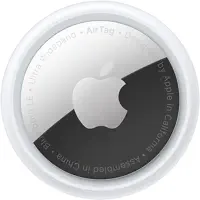
$29 for one. $99 for four. That's the entire upfront cost for an Apple AirTag 2.
After that? Nothing. Zero monthly fees, zero annual renewals, zero features locked behind a paywall. Every feature ships unlocked out of the box: Precision Finding with UWB, separation alerts when you walk away from a tagged item, family sharing so multiple people can track the same AirTag, and Lost Mode with custom contact messages. All free, all permanent.
The Find My network that tracks your AirTag's location is baked into iOS itself, running silently on every iPhone with iOS 14.5 or later. Apple doesn't charge for this because it's not a separate service. It's infrastructure, like FaceTime or iMessage.
The one recurring cost: a CR2032 battery, roughly once a year. A pack of four Energizer CR2032s runs about $6 on Amazon, so you're looking at $1.50 per AirTag per year. The AirTag battery life guide has the full replacement schedule.
How AirTag Compares to Tile on Cost
Tile hardware costs about the same as AirTag. The difference is what happens after you buy it.
Without Tile Premium ($2.99/month or $29.99/year), you lose Smart Alerts, location history, and free battery replacement. Those aren't niche extras.
Smart Alerts notify you the moment you walk away from a tagged item. Useful? Absolutely. I left my backpack at a coffee shop once because I didn't get that ping in time. Location history lets you see where your item has been over the past 30 days, which helps when you can't remember where you last had your keys. On AirTag, both of these features are free and always on. On Tile, they're paywalled.
Tile's free tier still lets you ring your tracker from your phone and see its last known location. But that's a pretty bare experience for a $30 device.
| Tracker | Hardware Cost | Monthly Fee | What You Lose Without Premium |
|---|---|---|---|
| Apple AirTag 2 | $29 (1-pack) | None | Nothing — full features included |
| Tile Sticker | $29.99 (1-pack) | $2.99/mo (Premium) | Smart Alerts, location history, free replacement |
| Samsung SmartTag 2 | $29.99 (1-pack) | None | Nothing — Galaxy users only |
| Chipolo ONE Point | $34.95 (1-pack) | None | Nothing — works in Apple Find My |
Do the math over two years: Tile Premium adds $71.76 on top of hardware. That's more than the cost of another AirTag four-pack.
Samsung SmartTag 2 and Chipolo ONE Point are also subscription-free, but both have trade-offs. SmartTag 2 only works with Galaxy phones via SmartThings Find, so it's irrelevant if you own an iPhone. Chipolo ONE Point plugs into Apple's Find My network (same as AirTag), but it lacks UWB Precision Finding and its speaker is noticeably quieter. I've used both side by side, and when something falls behind a couch cushion, that speaker volume difference matters more than you'd expect.
The one scenario where Tile still makes sense: you need a tracker that works across both iPhone and Android. AirTag is Apple-only. Apple's Find My support page confirms there's no Android version of Find My, and that hasn't changed since launch.
Does iCloud Cost Anything for AirTag?
No. This is a common misconception.
AirTag location data doesn't touch your iCloud storage. Your item locations are fetched in real time through the Find My network, and they don't count toward the free 5GB tier. You won't see "AirTag" anywhere in your iCloud storage breakdown. I checked on three different iCloud accounts, including one still on the free plan. All work identically.
The confusion comes from the fact that iCloud is part of the encrypted relay chain. When a nearby iPhone picks up your AirTag's Bluetooth signal, it encrypts the location and routes it through Apple's servers. But none of that data lands in your personal iCloud storage. Think of it like FaceTime: it runs through Apple's infrastructure, but your video calls don't eat your 5GB. Same principle.
One more thing worth clarifying: you also don't need an iCloud+ plan for the newer "Share Item Location" feature introduced in iOS 17. That lets someone else (a family member, for example) see your AirTag's location on their own phone. Completely free, no premium tier required.
If you want the technical details, the AirTag GPS explainer breaks down how the Find My network actually routes location data. Short version: Bluetooth pings, not GPS, relayed through nearby strangers' iPhones. The WiFi guide covers what hardware is inside the tracker itself.
Why Doesn't Apple Charge a Subscription?
Because AirTag isn't the product. The iPhone ecosystem is.
Apple's business model with AirTag is the same as with AirPods, Apple Watch, and HomePod: sell hardware that makes the iPhone more valuable, so people stay in the ecosystem and keep buying iPhones. AirTag's Find My network runs on existing Apple infrastructure that's already paid for by iPhone sales. There's no separate server farm Apple needs to maintain just for AirTag location pings.
Tile can't do this. Tile is a standalone company. It doesn't sell phones or laptops or operating systems. Its tracker hardware is a low-margin product, so recurring subscription revenue is how it stays alive. Life360 acquired Tile in 2022, and the subscription push got even stronger after that. Today, the free Tile experience is deliberately limited to push you toward Premium.
This difference matters long-term. If Tile raises its Premium price or changes what's included (which has happened before), you're stuck paying more or losing features you relied on. AirTag's features are tied to iOS updates, and Apple has only added capabilities over time. The AirTag 2 shipped with a louder speaker, longer UWB range, and a new camera-based Precision Finding mode for non-owners. Price? Same $29.
Will Apple ever add a subscription to AirTag? Nobody can predict the future, but there's no financial incentive. The Find My network costs Apple almost nothing to run because it's distributed across a billion existing iPhones. Adding a paywall would push users toward Chipolo or SmartTag, which defeats the ecosystem lock-in purpose. As long as Apple sells iPhones, AirTag will likely stay free.
Hidden Costs Worth Knowing
No monthly fee doesn't mean zero cost after purchase. Three things to budget for:
- Batteries: $1-2 per AirTag per year. CR2032, twist to open, 30-second swap. Stick with Energizer or Panasonic. The battery replacement guide walks through it.
- Holders and accessories: AirTag ships naked. No loop, no clip, no keyring in the box. Apple's own Leather Key Ring costs $35, and the FineWoven version is $29. Both cost nearly as much as the AirTag itself, which feels absurd. The good news: third-party silicone holders on Amazon start at $5-10 and work fine. I've been using a $7 keychain holder for over a year with no issues. For wallets, you'll need something slim enough to fit in a card slot. The AirTag wallet guide covers the best options.
- The 32-AirTag ceiling: Each Apple ID can track up to 32 AirTags simultaneously. Most people won't get anywhere near this. But if you're tagging luggage, keys, wallets, backpacks, camera gear, and vehicles across a family of four, it adds up faster than you'd think.
- Replacement cost: AirTags are durable (IP67 rated), but they're not indestructible. If one gets crushed or lost for good, you're buying a new $29 unit. There's no warranty replacement program like Tile Premium offers. That said, at $29 versus $36/year in Tile subscription fees, replacing an AirTag every couple of years still works out cheaper.
All one-time or near-trivial costs. If you buy a single AirTag with a third-party holder and replace the battery once a year, your total spend over three years is roughly $40. Try doing that math with Tile Premium.
For practical ideas on what to actually track, the best uses for AirTag guide covers 15 real setups people use daily.
Frequently Asked Questions
Does Apple charge a monthly fee for AirTags?
No. You buy the hardware once and everything else is free. The Find My network, Precision Finding, separation alerts, sharing with family members. No subscription, no premium tier, no in-app purchases.
Is there a fee to use AirTag with Find My?
Find My is free. It comes preinstalled on every iPhone running iOS 14.5+. You don't need iCloud+, Apple One, or any paid Apple service to see your AirTag's location.
Do you need iCloud+ for AirTag?
No. The free iCloud tier works fine. AirTag location data doesn't count toward your 5GB storage limit, so even if your iCloud is completely full of photos, your AirTags will still update normally.
How much do AirTags cost in total per year?
First year: $29 for one AirTag 2, or $99 for four. Every year after that, your only expense is a CR2032 battery at roughly $1.50 each. So year-two cost for a single AirTag is about $1.50. For four AirTags, maybe $6. That's less than a single month of Tile Premium.
Does Tile charge a monthly fee?
Not technically required, but practically yes. Without Tile Premium ($2.99/month), you lose the features most people actually want: Smart Alerts that notify you when you leave something behind, 30-day location history, and free battery replacements. The free tier gives you basic ring-to-find and that's about it.
Can I use an AirTag without an Apple subscription?
Yes. All you need is a free Apple ID and an iPhone running iOS 14.5 or later. No paid services required.
Does AirTag require a data plan?
The AirTag itself has no SIM card, no data plan, and no cellular radio. It broadcasts via Bluetooth only. Your iPhone needs an active data connection (cellular or WiFi) to receive location updates, but that's your existing phone plan. No extra line or hotspot needed. When your phone goes offline, you simply won't get new location pings until it reconnects. The AirTag keeps broadcasting its Bluetooth signal regardless, so other people's iPhones can still pick it up and relay the position in the background.