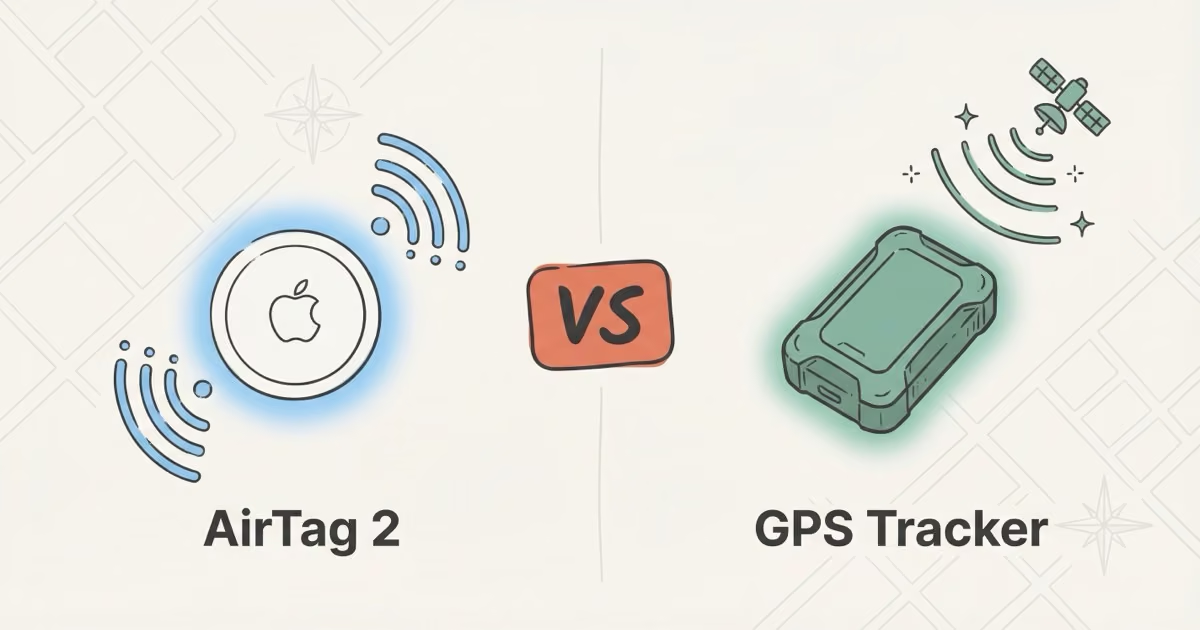
For keys, bags, and wallets in cities or suburbs, AirTag 2 ($29, no monthly fee) is the clear pick. For vehicles, remote assets, or anything that needs real-time tracking independent of nearby iPhones, get a GPS tracker like the Bouncie ($90 + $9/month) or LandAirSea 54 ($30 + $10/month). They solve different problems with different technology.
AirTag and GPS trackers answer the same question: "Where is my stuff?" But they answer it in completely different ways, and picking the wrong one wastes your money. An AirTag in a rural storage yard won't update for days. A $20/month GPS subscription to find your house keys is overkill by about $239 a year.
- AirTag 2 costs $29 with no monthly fee; GPS trackers like Bouncie cost $306+ over two years once subscription fees are included — a 9-17x price gap.
- AirTag updates location only when an iPhone passes within Bluetooth range; GPS trackers report every 15-60 seconds independently of nearby phones.
- In any major city or airport, Apple's Find My network (1 billion+ Apple devices) gives AirTag reliable updates every few minutes — coverage that rivals most GPS trackers.
- GPS trackers are the right tool for vehicles, remote assets, and anywhere iPhones are sparse; AirTag wins for everyday items in populated areas.
- AirTag 2's UWB Precision Finding is more accurate indoors (20-30cm) than GPS (5-50m error through walls), making it better for finding items inside buildings.
AirTag vs GPS Tracker: How the Technology Differs
These aren't two flavors of the same product. They run on entirely different infrastructure, and that gap is why one can be perfect while the other is useless for the exact same job.
AirTag 2: Bluetooth Crowd-Sourced Tracking
AirTag doesn't have GPS. No satellite chips, no cellular modem, no SIM card. Instead, it piggybacks on Apple's Find My network, a crowd-sourced system powered by over one billion Apple devices worldwide.
Here's the chain: your AirTag broadcasts an encrypted Bluetooth signal. Any nearby iPhone, iPad, or Mac picks it up and anonymously uploads the AirTag's location to iCloud. You see the update in Find My. The passing device owner never knows they helped. The whole process is end-to-end encrypted, and AirTag itself never knows where it is.
AirTag 2 adds Precision Finding via UWB. Once you're within about 60 meters, the U2 chip gives you directional arrows and haptic feedback, guiding you to within 20-30cm of the item. It also works on Apple Watch Series 9 and later now. For a deeper look at real-world accuracy, see our AirTag accuracy breakdown.
The limitation is simple: no iPhones nearby means no location update. In cities, that's rarely a problem. In a rural parking lot at 2 AM? Your AirTag might go hours without a ping.
GPS Trackers: Cellular Real-Time Tracking
A GPS tracker carries two radios. One receives satellite signals to calculate coordinates. The other is a 4G LTE cellular modem that transmits those coordinates to a server every 15 to 60 seconds. No bystander phones required.
The result: you can watch a GPS-tracked car move down a highway on a live map. Speed alerts, geofence notifications when something leaves a defined zone, hard-braking detection, route history playback. All independent. All working anywhere with cell tower coverage.
The trade-off? Monthly data subscriptions run $9-20/month. The devices need power: either a rechargeable battery you'll charge every 1-4 weeks, or a hardwired connection to a vehicle's OBD-II port. And GPS signals weaken indoors, so accuracy drops inside buildings and parking garages.
Head-to-Head Specs: AirTag 2 vs GPS Tracker
| Feature | Apple AirTag 2 | GPS Tracker (Bouncie / LandAirSea 54) |
|---|---|---|
| Technology | Bluetooth + UWB + Find My crowdsourcing | GPS satellite + 4G LTE cellular |
| Device Cost | $29 (1-pack) / $99 (4-pack) | $30-$90 |
| Monthly Fee | $0 — none, ever | $9-$20/month (required) |
| 2-Year Total Cost | $29 | $246-$570 |
| Real-Time Tracking | ✗ No (crowd-sourced, periodic) | ✓ Yes (every 15-60 seconds) |
| Works Without Nearby Phones | ✗ No | ✓ Yes (cell coverage only) |
| Urban Coverage | ✓ Excellent | ✓ Excellent |
| Rural / Remote Coverage | ⚠ Unreliable | ✓ Good |
| Precision Close-Range | ✓ UWB: 60m, 20-30cm | ⚠ GPS only: 5-10m |
| Battery Life | 12+ months (CR2032, replaceable) | 1-4 weeks or hardwired |
| Speed / Route Tracking | ✗ No | ✓ Yes |
| Geofence Alerts | ⚠ Separation Alert only | ✓ Custom zones |
| Android Support | ✗ iPhone only | ✓ iOS + Android |
| Size | 31.9mm disc, 12.2g | Compact to medium (varies) |
| Anti-Stalking Protection | Built-in iOS + Android alerts | None built in |
The table makes it look like a close call. It's not. The right pick depends on what you're tracking and where it spends its time.
When AirTag 2 Is the Better Buy
AirTag wins every scenario where the item stays in populated areas and you don't need live location updates. That covers most everyday tracking needs.
- Keys and wallet — Lost items are almost always found within 100 meters of your home or office. UWB Precision Finding guides you straight to them with directional arrows.
- Luggage — Major airports are saturated with iPhones. Your AirTag updates frequently through the entire travel chain, and you'll know within minutes if your bag takes a wrong turn.
- Backpack, laptop bag, stroller — Low-stakes urban items benefit most from AirTag's one-time $29 cost. No subscription means no recurring expense for something you use daily.
- Parked car in a city — AirTag 2's Precision Finding locates your car with directional guidance once you're within 60 meters. Pedestrian iPhone traffic handles the location updates.
- Budget tracking across multiple items — The 4-pack at $99 ($25 each) lets you tag keys, wallet, bag, and luggage for less than one month of a GPS subscription.
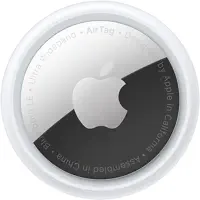
- $29 one-time cost, zero monthly fees
- UWB Precision Finding: 60m range, 20-30cm accuracy
- 12+ month battery, user-replaceable CR2032
- 50% louder speaker than original AirTag
- Works on Apple Watch for Precision Finding
- iPhone only — no Android owner tracking
- No real-time tracking (crowd-sourced updates only)
- Unreliable in rural or low-iPhone-density areas
- No speed alerts, route history, or geofence zones
When a GPS Tracker Is Worth the Subscription
GPS trackers earn their monthly fee in one specific way: they work independently. No reliance on bystanders' phones, no gaps in coverage when foot traffic drops. If that independence matters for your use case, the subscription pays for itself.
- Vehicle theft recovery — A stolen car gets driven out of the area fast. AirTag might not update if the thief avoids populated roads. A GPS tracker pings every 15-60 seconds regardless, giving police a live breadcrumb trail.
- Teen driver or fleet monitoring — Speed alerts, hard-braking detection, and full route playback. AirTag offers none of this. For vehicle monitoring needs, GPS is the right tool.
- Remote assets — Trailers, equipment, ATVs, and boats at storage yards or rural properties have zero iPhone foot traffic. AirTag is effectively blind in these environments.
- Construction sites — Equipment theft from job sites is common. GPS trackers with geofence alerts notify you the moment something leaves the site boundary.
- Android users — AirTag requires iPhone. Period. Android users who need any kind of tracking should look at GPS options or the Samsung SmartTag 2.
Top GPS Tracker Pick: Bouncie
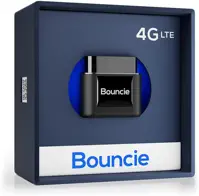
Bouncie plugs into your car's OBD-II port and delivers real-time 4G LTE updates every 15 seconds. It also monitors engine health, fuel consumption, and hard braking. At $9/month, it's the cheapest ongoing GPS option I've found that actually works well. The catch: it only fits cars with an OBD-II port, and it's visible if someone checks.
Top GPS Tracker Pick: LandAirSea 54
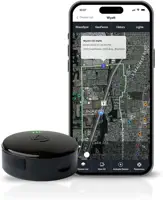
The LandAirSea 54 is more versatile than Bouncie because it doesn't need an OBD-II port. It attaches magnetically to any metal surface, which makes it work for trailers, equipment, and hidden vehicle mounting. Waterproof (IP67), works in 200+ countries. Battery lasts 1-2 weeks with regular tracking, which means you'll be charging it often. For a detailed look at one GPS tracker option head-to-head with AirTag, see our Spytec GPS review.
The 2-Year Cost Gap Is Massive
| Tracker | Device | Monthly Fee | 2-Year Total |
|---|---|---|---|
| AirTag 2 (1-pack) | $29 | $0 | $29 |
| Bouncie | ~$90 | $9/mo | ~$306 |
| LandAirSea 54 | ~$30 | $10-20/mo | ~$270-$510 |
Over two years, a GPS tracker costs 9-17x more than AirTag. That premium is justified only when you actually need real-time independent tracking. For everyday items like keys and wallets, paying $270+ in subscriptions makes no financial sense when a $29 AirTag does the job.
If you want GPS-level coverage without ongoing fees, options exist but involve real trade-offs. See our no-monthly-fee GPS tracker guide for the full honest breakdown. For the cheapest vehicle tracking options overall, we've also covered the best car GPS trackers without monthly fees.
The Decision Comes Down to Two Questions
Forget the spec sheets for a second. Two questions tell you which to buy.
Question 1: Do you need real-time location updates?
If yes, get a GPS tracker. AirTag can't do real-time. It updates when an iPhone happens to walk past, which could be minutes in Manhattan or hours on a farm. GPS trackers report every 15-60 seconds, all day, regardless of who's nearby.
Question 2: Is the item in an area with regular iPhone foot traffic?
If yes, AirTag works great and saves you $200+ per year versus GPS. In any major city, airport, or suburban neighborhood, the Find My network is dense enough for reliable updates every few minutes. If the answer is no (rural land, private storage, isolated parking), AirTag won't get the updates it needs.
Many people use both. AirTag on keys and laptop bag (urban, everyday). Bouncie in the car (vehicle, real-time). The two tools complement each other instead of competing. For our full AirTag 2 review, we break down exactly where it shines and where it falls short.
The Bottom Line
For most people tracking everyday items, buy the AirTag 2. It's $29, it works in any city, and you'll never pay a subscription. The only reason to pick a GPS tracker is if you need real-time updates, vehicle monitoring features, or coverage in remote areas where iPhones don't pass by. That's a smaller audience than most comparison articles admit.
Frequently Asked Questions
Can AirTag track a stolen car in real time?
No. AirTag updates only when a nearby Apple device passes within Bluetooth range. A stolen car driven to a low-traffic area could go hours without an update. For vehicle theft recovery, a cellular GPS tracker that reports every 15-60 seconds is far more reliable. Apple's own product page describes AirTag as a personal item finder, not a vehicle tracker.
Does AirTag work without cell service?
AirTag itself uses Bluetooth, not cellular. But the nearby iPhone that relays its location needs either cell or Wi-Fi to upload the data. So if you and your AirTag are both in a complete dead zone, no update will happen. In practice, this is rare in populated areas.
Is AirTag accurate enough to find something inside a building?
Yes, and it's actually better indoors than GPS trackers. Within 60 meters, AirTag 2's UWB Precision Finding gives you directional arrows down to 20-30cm accuracy. GPS signals weaken through roofs and walls, often showing locations 5-50 meters off. For finding something inside a house, office, or airport terminal, AirTag wins easily.
Can I use AirTag and a GPS tracker on the same car?
Yes, and it's a smart layering strategy. The GPS tracker provides continuous real-time reporting. A hidden AirTag acts as a backup that thieves are unlikely to find or disable since it's tiny, has no wires, and makes no visible connection to the vehicle. Many r/carsecurity users report running both.
What if I need tracking but don't want a subscription?
AirTag is the most capable subscription-free tracker for everyday items. For GPS-level coverage without monthly fees, some trackers bundle 1-2 years of service in the purchase price, but none offer truly free GPS indefinitely. We've covered the realistic options in detail elsewhere on the site.
Which is better for international travel?
AirTag. It works in 140+ countries wherever Apple devices exist, with zero roaming fees or SIM changes. GPS trackers need compatible cellular bands and either an international SIM or a roaming plan. LandAirSea 54 covers 200+ countries but you'll pay for international data. For luggage specifically, AirTag is simpler and cheaper by a wide margin.
Can GPS trackers be used to track someone without consent?
Legally, this varies by jurisdiction. Most US states require consent to track another person's vehicle. AirTag has built-in anti-stalking alerts on both iPhone and Android that notify someone if an unknown AirTag travels with them. GPS trackers have no such protection. The cross-platform unwanted tracking detection standard that Apple co-developed with Google applies only to Bluetooth trackers, not cellular GPS devices.